
The Story Behind My Pumpkin Pie Recipe
A Family Favorite for More Than 50 Years
This pumpkin pie has been part of my cooking life for more than fifty years. The earliest version came from a simple recipe printed on the back of a Libby pumpkin purée can — the kind so many American cooks relied upon for their holiday baking. Over time, though, the recipe evolved into something entirely my own. The most transformative change was moving from canned pumpkin to fresh pumpkin, which deepens the flavor, softens the texture, and adds a richness you simply can’t achieve any other way. In my family, this pie became such a beloved tradition that my Italian husband sometimes enjoys it in place of a birthday cake. Each autumn, I grow pumpkins in my garden, roast and purée them, then freeze the purée in small portions so I can make this pie — or my pumpkin bread — whenever the mood strikes. There’s something deeply comforting about pulling out a bag of homemade pumpkin purée and transforming it into a warm, fragrant slice of home.
How Pumpkin Pie Became a Holiday Icon
From Indigenous Traditions to Early American Kitchens
Pumpkins are native to North America, where Indigenous peoples cultivated and cooked them long before Europeans arrived. Early preparations ranged from savory dishes to sweetened puddings, and pumpkins quickly found their way into colonial cooking as a dependable and versatile ingredient. Some of the earliest “pumpkin pies” were nothing like the custard-filled versions we know today. Colonists often stewed pumpkin with spices or baked a sweetened custard directly inside the pumpkin shell itself.
The English Influence
Across the ocean, English cooks were making “pompion pies,” rustic pastries filled with pumpkin, apples, sugar, spices, and sometimes herbs or dried fruits. These early pies were hearty, aromatic, and comforting, but still very different from the smooth custard pumpkin pie that would evolve later in America.

The Emergence of the Modern Pie
The pumpkin pie we recognize today — pumpkin purée blended with eggs, milk, sugar, and warm spices, baked in a pastry crust — began appearing in American cookbooks in the late 18th century. By the early 19th century, pumpkin pie had become a cherished part of autumn and harvest celebrations. Its association with Thanksgiving deepened over time, until the two became nearly inseparable. By the mid-1800s, pumpkin pie wasn’t just a dessert; it was a cultural symbol of abundance, gratitude, and the warmth of the holiday season.
Have a question or want to leave your own tips and recommendations? Click here to leave a comment:
Leave a CommentA Tradition That Endures
Pumpkin pie endures because it is so closely tied to the feeling of the season. The scent of cinnamon, ginger, and cloves drifting through the kitchen, the golden-orange custard, the warmth of the oven on a cool day — all of it captures the essence of autumn. Even here in Italy, serving this pie brings with it that unmistakable feeling of seasonal comfort and connection.
My Version Today
My recipe stays true to the classic spirit of pumpkin pie but celebrates the deeper, richer flavor of fresh pumpkin. It’s simple, aromatic, and wonderfully nostalgic — the perfect dessert for Thanksgiving, the holidays, or any cozy autumn day when you want your kitchen filled with the warm spices of the season.
It was just yesterday that my friend Debbie asked me for my pumpkin pie recipe and I realized I had never transcribed the recipe and put it on my website. So thank you Debbie for this request and I'm now happy to share my recipe with you and everyone. Enjoy!

Ingredients
For the Pumpkin Purée
- 1.3 kg Fresh pumpkin about 1.2–1.5 kg (2½–3½ lb) (Yields about 425 g / 2 cups of purée once roasted and drained)
For the Pie Filling
- 2 large eggs lightly beaten
- 425 g fresh pumpkin purée
- 100 g granulated sugar
- 1¼ teaspoons ground cinnamon
- ½ teaspoon salt
- ½ teaspoon ground ginger
- ¼ teaspoon ground cloves
- 360 ml sweetened evaporated milk
For the Crust
- 1 unbaked 23 cm 9-inch pie crust
Instructions
- Preheat the oven to 200°C / 400°F.
Cook the pumpkin and make the purée
- Cut the pumpkin in half and scoop out the seeds.
- Place the halves cut-side down on a baking sheet.
- Roast 45–60 minutes, until very soft.
- Scoop out the flesh and purée until smooth.
- Place the purée in a muslin cloth–lined sieve or bowl and allow it to drain for several hours or overnight to remove excess liquid.
- Measure out what you need for the pie.
Make the pie
- Preheat the oven to 220°C / 425°F.
- Place the unbaked pie crust in a 23 cm (9-inch) pie dish.
- In a large bowl, whisk the eggs.
- Add the pumpkin purée, sugar, cinnamon, salt, ginger, and cloves, and mix well.
- Slowly pour in the evaporated milk and whisk until the filling is smooth.
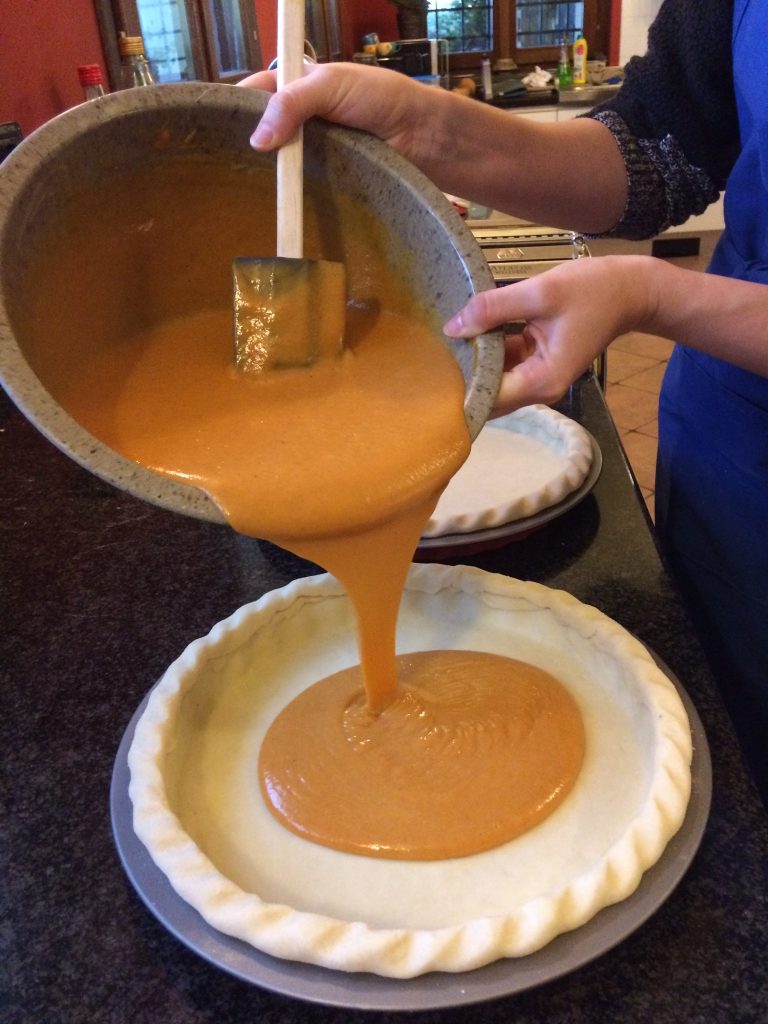
- Pour the filling into the unbaked crust.
- Bake for 15 minutes at 220°C / 425°F.
- Reduce the oven to 175°C / 350°F and bake for an additional 40–55 minutes, or until the center is set and a knife inserted near the middle comes out clean.
- Cool for at least 2 hours before slicing.
Notes
Spice levels can be adjusted to taste.
Wine Pairing
A lightly sweet Italian wine such as Vin Santo, Passito di Pantelleria, or Moscato d’Asti pairs beautifully with this pie.
Nutrition
if you'd like to enjoy some of my other seasonal recipes, then be sure to grab my just released e-book, My Italian Winter Table Recipe Collection. Here's the link for you!


Some other pumpkin recipes for you to enjoy:
Pumpkin Gorgonzola Risotto
Pumpkin & Amaretto Ice Cream




Please leave your comment here. Your feedback is important!